E-mail Us


Are Electric Toothbrushes Better? What Experts Say
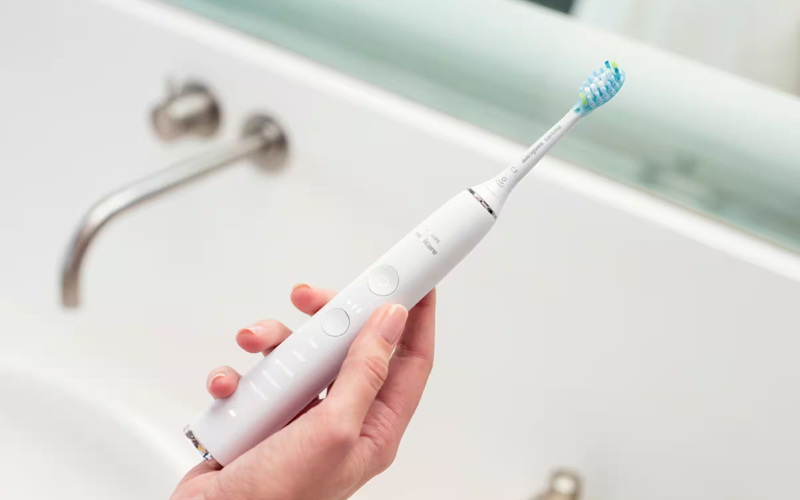
Brushing your teeth is a daily ritual, but are you using the right toothbrush for that and actually getting the greatest clean possible? Many people believe that electric toothbrushes are the best option, and the argument between them and manual toothbrushes has been going on for years. But do dentists really recommend them, or is it all hype?
You’re in the right place if you’ve ever questioned if switching to an electric toothbrush is worthwhile. Let’s find out the truth and hear from the professionals.
What Makes Electric and Manual Toothbrush Different?
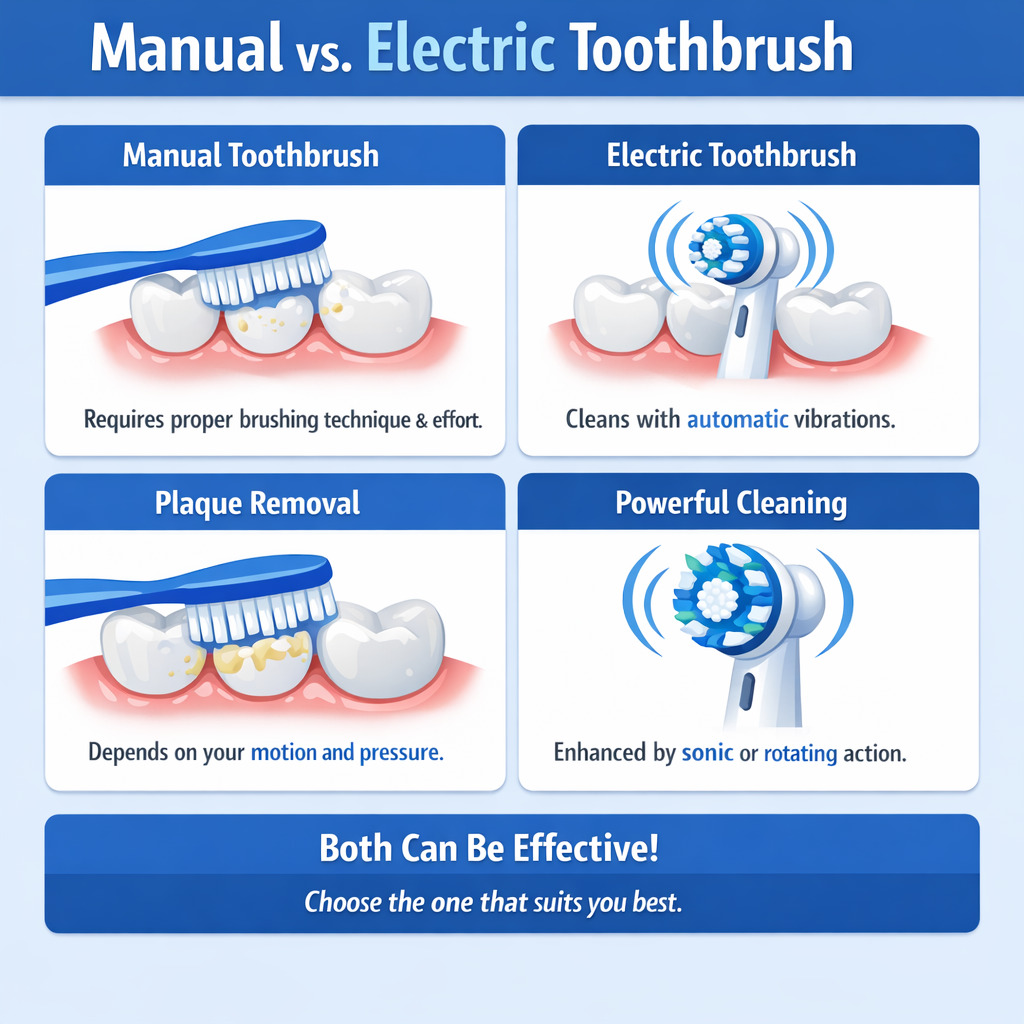
Now, let’s see how each toothbrush functions before comparing them to each other.
- Plaque removal with a manual toothbrush depends on your brushing motion, pressure, and skill.
- Electric toothbrush increases cleaning power with little effort by using sonic, spinning, or oscillating vibrations.
One has a distinct benefit, yet both can be useful. Let’s find out why.
Why Electric Toothbrushes Are Suggested By The Dentists?
For many vital reasons, dentist frequently recommends electric toothbrushes. Those are:
- Research indicates that electric toothbrushes can remove up to 21% more plaque than manual ones.
- It is ideal for children, the elderly, and people with mobility impairments because the automatic motion takes care of the majority of the work.
- A lot of toothbrushes contain pressure sensors that stop you from brushing too vigorously, which lessens gum irritation and recession.
- Build-in timer guides in making sure you always brush for the recommended 2 minutes.
After 3 months, those who used electric toothbrushes saw 11% less gum inflammation than those who used manual brushes, according to research published in the Journal of Clinical Periodontology.
For Whom Is an Electric Toothbrush A Must?
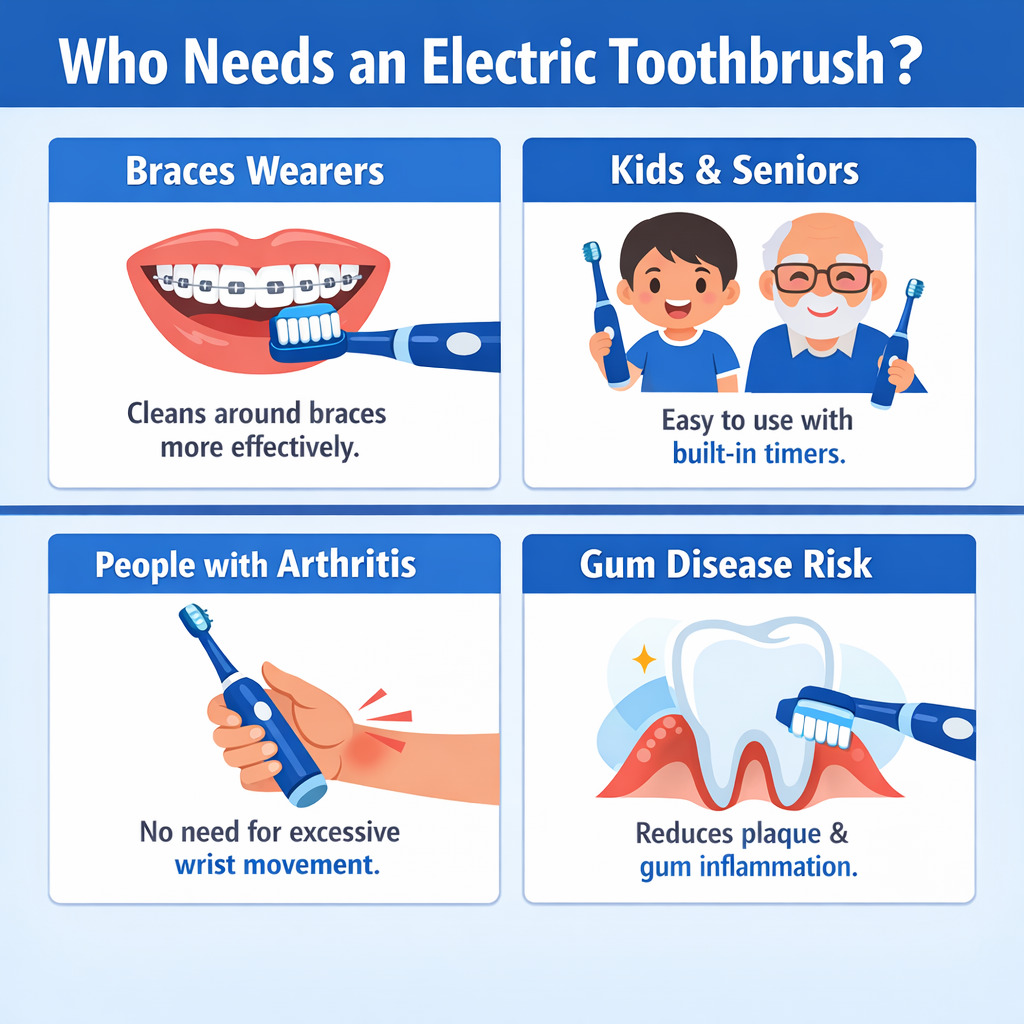
Although everyone can gain from electric toothbrushes, some groups will find them especially useful:
- For individuals wearing braces, the oscillating bristles do a better job of cleaning around wires and brackets.
- It’s simple to use, integrated timers support good brushing practices and long-term oral health for children & seniors.
- Individuals with arthritis don’t need to move their wrists excessively with this toothbrush.
- For people with a risk of gum disease, electric brushes help minimize plaque accumulation, which lowers inflammation in the gums.
Is the Switch Necessary?
You might not require an electric toothbrush if you brush well with a manual one. An electric toothbrush, on the other hand, is revolutionary if you have problems with plaque, gum disease, or consistency.
In the end, our dentists concur that electric toothbrushes improve the efficiency and ease of brushing. It might be time to update if you want a healthier smile with less work.
Frequently Asked Questions About Electric Toothbrushes vs. Manual Toothbrushes
1. Are electric toothbrushes really better than manual toothbrushes?
Electric toothbrushes are often more effective at removing plaque and reducing gum inflammation because their oscillating or sonic motions provide consistent cleaning. However, a manual toothbrush can still be effective if used with proper technique and for the full two minutes.
2. Do dentists recommend electric toothbrushes?
Yes, many dentists recommend electric toothbrushes, especially for people who struggle with brushing technique, plaque buildup, or gum disease. Built-in timers and pressure sensors help ensure safer and more thorough brushing.
3. Are electric toothbrushes safe for gums?
Yes. In fact, many electric toothbrushes include pressure sensors that prevent aggressive brushing, which helps protect gums from irritation and recession. Using a soft brush head further improves safety.
4. Can an electric toothbrush help with gum disease?
Electric toothbrushes can help reduce plaque and improve gum health, which supports the prevention and management of gingivitis. However, they do not replace professional dental treatment for gum disease.
5. How long should you brush with an electric toothbrush?
You should brush for at least two minutes, twice daily. Most electric toothbrushes have built-in timers or quadrant pacers that guide you to spend equal time on each area of the mouth.
6. How often should electric toothbrush heads be replaced?
Replace the brush head every 3 months or sooner if bristles become frayed. Worn bristles clean less effectively and may irritate gums.