E-mail Us


How Invisalign Helps With TMJ-Related Discomfort
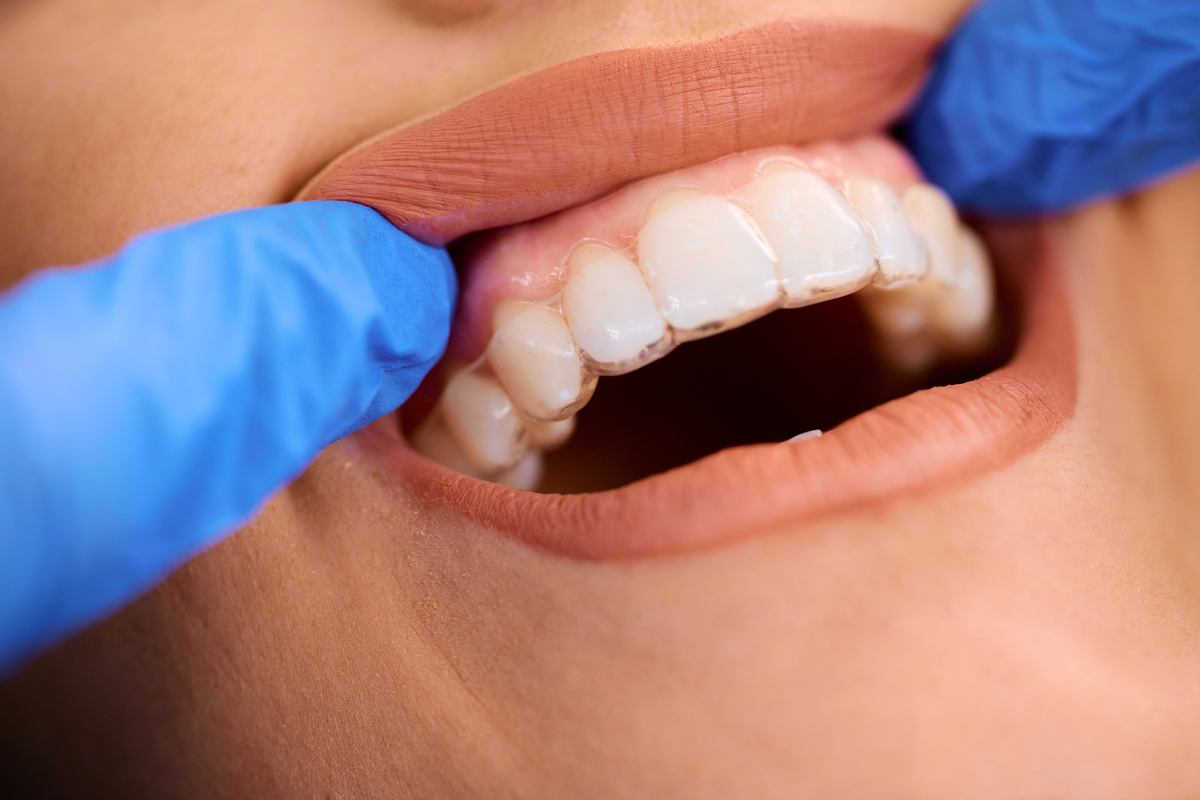
Temporomandibular Joint Disorder (TMJ) is a common condition that causes discomfort, pain, and restricted jaw movement. If you have TMJ-related pain, you’re not alone. While this condition is often due to misaligned teeth or bite problems, it can be exacerbated by stress and grinding your teeth. As TMJ symptoms such as jaw pain, headaches, and sound clicking become more prevalent, many individuals rely on methods to relieve their pain. The good news is that one increasingly popular method for treating TMJ problems is Invisalign.
The first thing that comes to mind when you think of Invisalign is usually straight teeth. However, the advantages of this treatment go far beyond aesthetics. It has been proven to correct misalignments that may be causing TMJ discomfort in many patients. Invisible aligners are designed to move your teeth into their correct positions, which can improve the alignment of your bite and reduce tension in your jaw joints. So if you live in Upland and are facing any TMJ symptoms, Invisalign can be an effective way to treat them.
How Does Invisalign Help with TMJ Pain?
Although the end goal of Invisalign is straight teeth, the benefits are not just cosmetic. Misalignment also leads to improper jaw function, resulting in TMJ-related discomfort.
The aligners are meant to be worn all day and night, and they’re changed every one to two weeks. These gentle adjustments gradually realign your bite, making your jaw work more comfortably. Unlike traditional braces, Invisalign can be removed by patients, providing greater flexibility and convenience throughout treatment.
The Effect of a Bad Bite on Your TMJ Health
Misaligned teeth put unnatural pressure on your jaw, which only escalates discomfort and other potential issues. The temporomandibular joint (TMJ) connects your lower jaw to your skull, and when your bite isn’t right, that means more work for your jaw. This additional effort can lead to pain, tension, and other TMJ-related problems. Here’s how misaligned teeth can impact your TMJ health:
- Additional Stress on the Jaw Joint: Misalignment causes the jaw to strain harder and works overtime to connect your teeth, leading to TMJ stress and pain.
- Jaw Pain and Tightness: Over time, this extra pressure can lead to pain and tightness in the joint, as well as difficulty moving it comfortably.
- Jaw Locking and Limited Movement: It can also lock or limit the range of motion in your jaw, so that it’s harder to open your mouth wide.
- Headaches: The strain that misaligned teeth can cause can, in turn, transmit to the head and result in constant headaches or migraines.
- Teeth Grinding and Clenching: This often causes many people with TMJ problems to grind or clench their teeth at night, worsening the condition.
Invisible aligners work gradually to correct your misalignment, placing less pressure on your jaw and allowing it to function in its most natural and comfortable form.
The Benefits of Invisalign for TMJ Relief
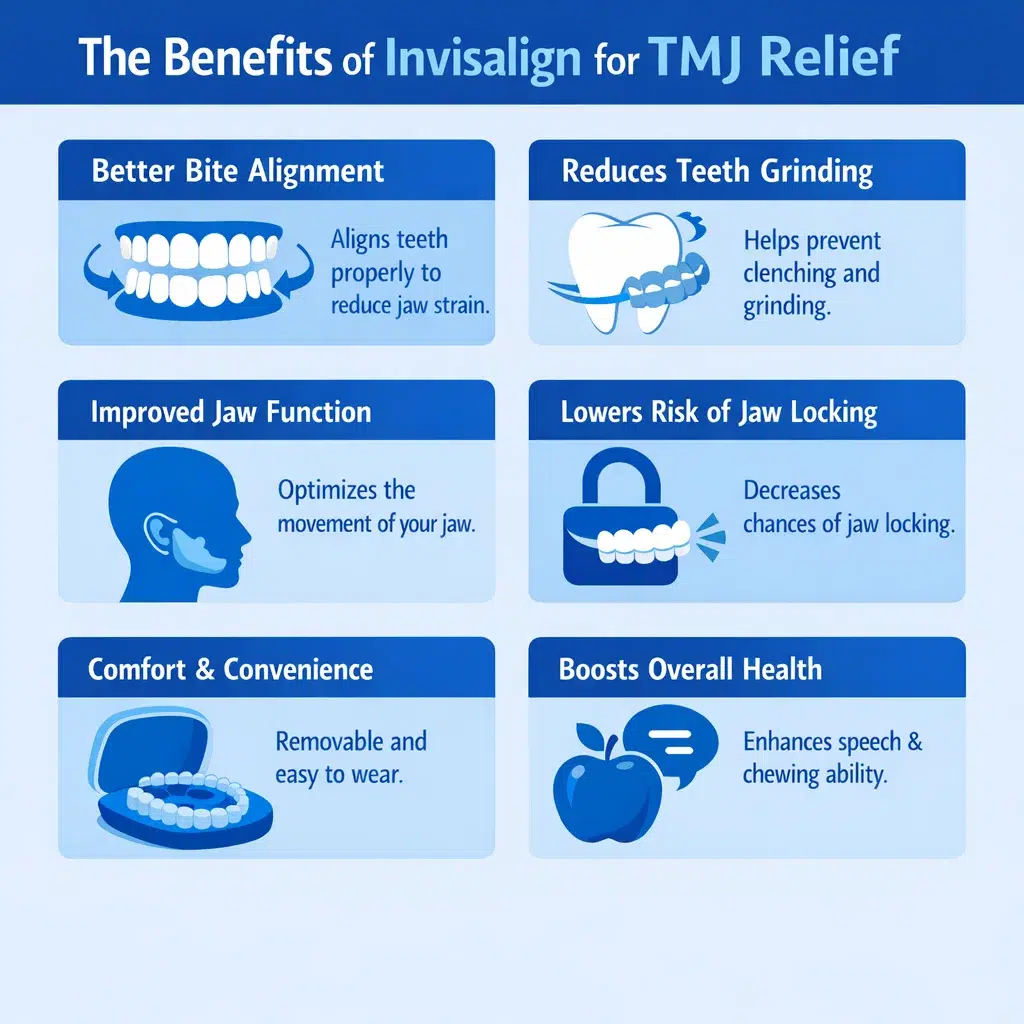
Invisalign not just straightens teeth but also reduces TMJ pain. It alleviates jaw strain caused by misaligned teeth, relieves pain, improves biting function, and, most importantly, provides long-term relief from TMJ issues through gradual alignment correction.
- Better Bite Alignment: Invisalign gently nudges your teeth into position by bringing them closer together, ensuring your upper and lower teeth align better. These make adjustments that relieve the jaw and take off pressure from your jaw joint, thus avoiding pain and discomfort in your joints.
- TMJ Treatment: Teeth grinding can lead to TMJ pain and is one of the top causes of this type of discomfort, often due to misalignment. By aligning your bite and improving jaw function, invisible aligners minimize how much you grind.
- Better Functional Ability of the Jaw: When your teeth are positioned correctly, your jaw functions optimally, reducing stress on the temporomandibular joint.
- Reduced Risk of Jaw Locking: Misalignment can increase the risk of jaw locking. This risk can be minimized by correcting the underlying misalignment using invisible aligners.
- Comfort and Convenience: Unlike traditional braces, Invisalign aligners are removable, making them more convenient to wear during the day. They also are less likely to irritate the gums or mouth, which can be an issue with metal braces.
- Improved General Health: In addition to improved jaw function, patients may also enjoy other health benefits, such as improved speech and chewing ability, as their oral health improves.
When Will You Start Seeing the Results of Invisalign?
The length of the Invisalign process varies based on the severity of your TMJ symptoms and the amount of correction needed. This process usually takes between a few months and more than one year. But most patients show TMJ pain relief in the first several months of treatment as their bite improves.
Is Invisalign the Right TMJ Treatment for You?
While Invisalign plays an excellent role for many TMJ sufferers, you should determine whether this treatment option is advisable for your condition. Invisible aligners can help straighten your teeth, which will reduce pressure on the jaw. Not all TMJ cases are suitable for this sort of treatment. Here’s how to determine if you’re a candidate for Invisalign:
- Ideal for Misalignment-Induced TMJ: If your jaw pain is linked to misaligned teeth or an improper bite, you are likely a good candidate for Invisalign. It can help alleviate jaw tension and enhance alignment.
- Mild to Moderate TMJ Symptoms: If you only have mild to moderate TMJ symptoms, invisible aligners are the way to go! If you suffer from jaw pain, headaches, or discomfort caused by an uneven bite, then Invisalign could be a viable option for you.
- No Severe Jaw Structural Issues: Invisible aligners cannot effectively alleviate symptoms of severe TMJ cases where the jaw joint itself has structural issues. In such cases, other treatments might be needed.
- Good Oral Health and Commitment: Accommodating patients, maintaining good oral hygiene, and wearing aligners consistently. It’s an excellent option for you, as long as you are willing to adhere to the treatment plan and can look after your aligners.
- Consultation is Key: The quickest way to determine whether Invisalign is a good fit for your TMJ care is to consult an orthodontist or dentist. They can assess your condition and design a tailored treatment plan.
If you think invisible aligners can alleviate your TMJ pain, a consultation can help summarize how the treatment works best for you.
Say Goodbye to TMJ Pain with Invisalign
If you’re enduring the distress of TMJ, then Invisalign may do a great deal to alleviate your suffering by correcting what could be causing it, misalignment. The ability of invisible aligners to improve your bite and jaw function also eliminates strain on your TMJ, which can truly enhance your quality of life.
At Young Dental Health Center, we specialize in helping our patients choose the right treatment option for their unique needs, whether for aesthetic reasons or relief from jaw pain. Now is the moment to take charge of your dental health and get the relief you deserve. Book a consultation with us today to discuss your TMJ discomfort and how Invisalign may help.
Questions People Ask About Invisalign
How long does Invisalign take to relieve TMJ discomfort?
The timeline varies, but most patients begin to feel relief within the first few months. For more severe cases, it may take longer, as Invisalign gradually corrects misalignment and reduces strain on the jaw.
Can Invisalign permanently fix my TMJ symptoms?
Invisalign offers long-term relief by improving bite alignment, which can significantly reduce TMJ symptoms. However, some individuals may require ongoing care or maintenance to continue managing their condition effectively.
Do I still need to wear a nightguard if I use Invisalign for TMJ?
If you grind your teeth at night, you may still need a nightguard, even with Invisalign. Your dentist or orthodontist will evaluate your condition and recommend the best solution for managing teeth grinding.