E-mail Us


Types of Teeth Whitening Treatments Explained

A brighter smile can change the way you feel about yourself—and how others see you. If you’ve been thinking about whitening your teeth but aren’t sure where to start, you’re not alone. Many patients in Upland ask the same question:
Which teeth whitening treatment is right for me?
Let’s break it down in a simple, practical way so you can make a confident decision.
Why Do Teeth Become Discolored?
Before choosing a teeth whitening treatment, it helps to understand the cause. Common reasons include:
- Coffee, tea, and red wine stains
- Tobacco use
- Aging (enamel naturally thins over time)
- Certain medications
- Poor oral hygiene
Living in a busy city like Upland, where coffee runs and social dining are part of daily life, it’s easy for stains to build up over time.
Types of Teeth Whitening Treatments
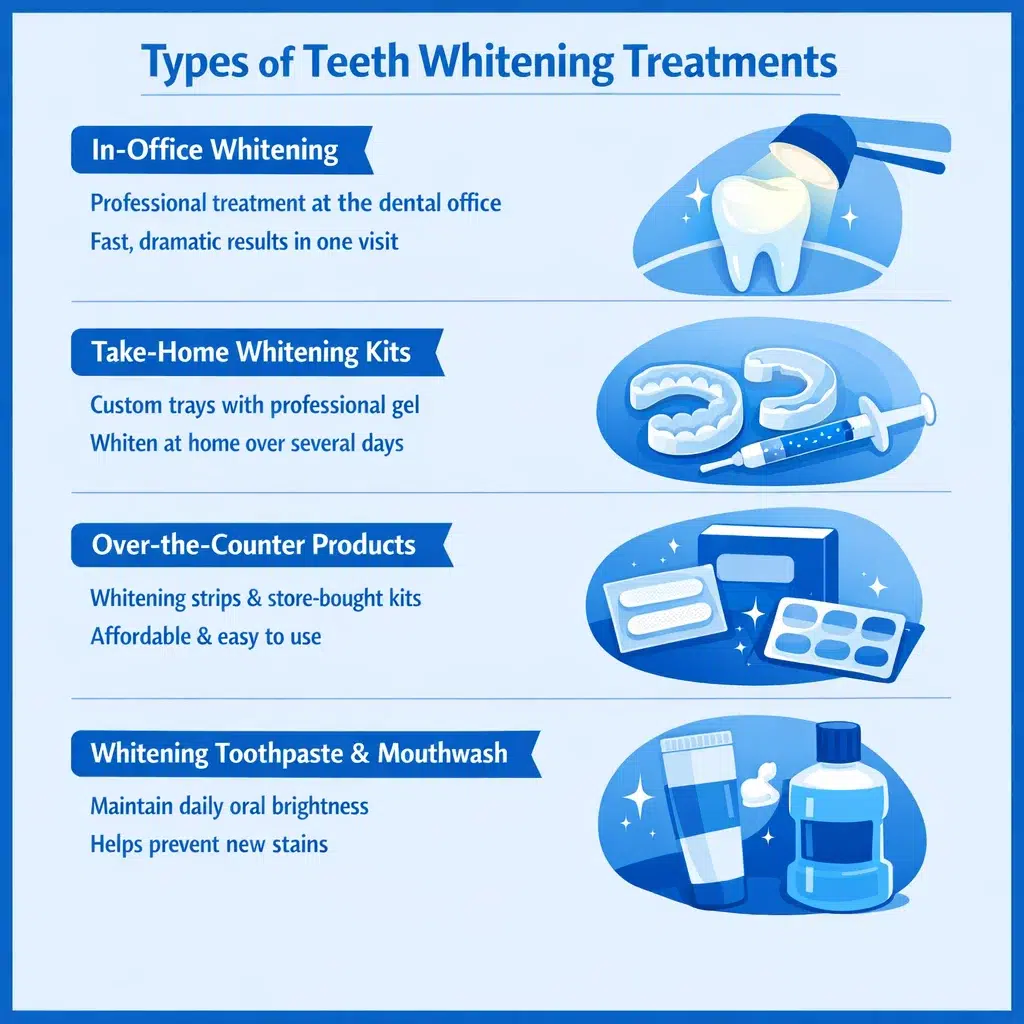
1. In-Office Professional Whitening
This is the fastest and most effective option available.
How it works:
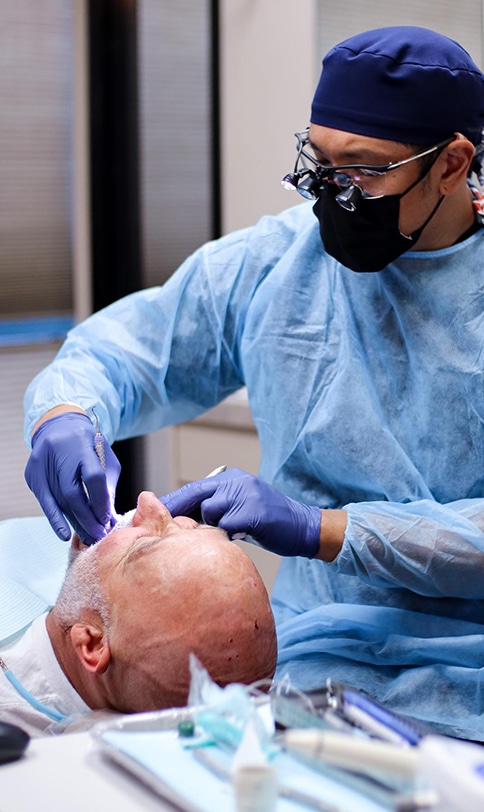
A dental professional applies a high-concentration whitening gel and may use a special light to accelerate results.
Benefits:
- Immediate results (often in one visit)
- Safely performed under supervision
- Ideal for deep stains
Best for:
Patients who want dramatic results quickly—perfect before weddings, interviews, or big events around Upland.
2. Take-Home Whitening Kits (From Your Dentist)
A popular balance between convenience and effectiveness.
How it works:
Custom trays are created to fit your teeth, and you use a professional-grade whitening gel at home over several days or weeks.
Benefits:
- More controlled and gradual whitening
- Less sensitivity than some in-office treatments
- Custom-fit trays for even results
Best for:
Busy Upland residents who prefer whitening on their own schedule.
3. Over-the-Counter Whitening Products
These include strips, pens, and store-bought trays.
How it works:
Lower-strength whitening agents are applied directly to the teeth.
Benefits:
- Affordable
- Easily accessible
Limitations:
- Less noticeable results
- One-size-fits-all design may lead to uneven whitening
- Can increase sensitivity if used incorrectly
Best for:
Mild stains or maintenance after professional treatment.
4. Whitening Toothpaste and Mouthwash
These products help maintain brightness rather than dramatically change it.
How it works:
They contain mild abrasives and low-level whitening agents.
Benefits:
- Easy to incorporate into daily routine
- Helps prevent new stains
Limitations:
- Minimal whitening effect
- Won’t remove deep discoloration
Best for:
Keeping your smile bright after a whitening treatment.
5. Internal Whitening (For Discolored Teeth After Root Canal)
A specialized option for a single tooth.
How it works:
Whitening material is placed inside the tooth by a dentist.
Benefits:
- Targets discoloration from within
- Effective for non-vital teeth
Best for:
Patients with one darkened tooth due to trauma or prior treatment.
How to Choose the Right Treatment
Choosing the best option depends on:
- The severity of discoloration
- Your budget
- Time availability
- Tooth sensitivity
- Desired speed of results
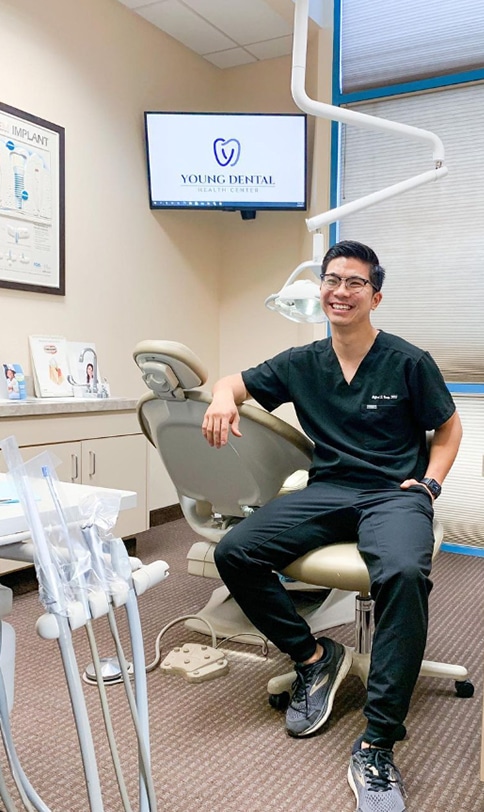
At Young Dental Health Center, we often recommend starting with a consultation to evaluate your teeth and discuss your goals. This ensures safe, even, and long-lasting results.
Tips to Maintain Your Results
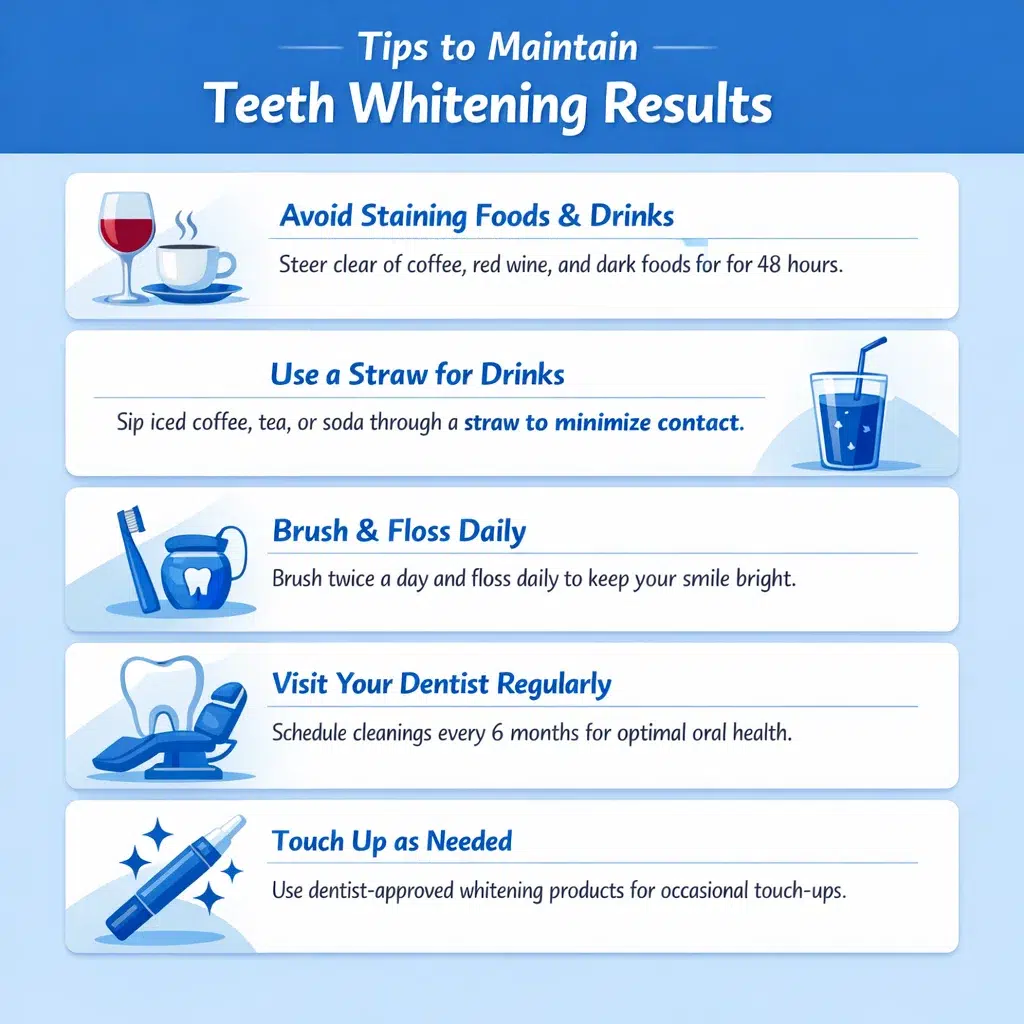
After whitening, keep your smile bright with these simple habits:
- Avoid staining foods and drinks for 48 hours
- Use a straw for beverages like iced coffee or soda
- Brush and floss daily
- Schedule regular dental cleanings
- Touch up with dentist-approved products
Ready for a Brighter Smile?
A confident smile starts with the right treatment plan. Whether you want quick results or a gradual transformation, there’s a whitening solution tailored just for you.
If you’re in Upland or nearby areas, schedule a consultation with Young Dental Health Center today and take the first step toward a healthier, more radiant smile.
Call us at (909) 665-1300 or book your appointment online—your brighter smile is closer than you think.
Frequently Asked Questions (FAQs)
Is professional teeth whitening better than over-the-counter products?
Yes, professional whitening offers stronger, safer, and more even results compared to store-bought options.
Can teeth whitening remove all types of stains?
It works best on surface stains caused by food and drinks. Deep or internal stains may require alternative cosmetic treatments.
How often can I get my teeth whitened?
Most patients can safely whiten their teeth once every 6–12 months, depending on their oral health and habits.
Does teeth whitening damage enamel?
No, when done correctly under dental supervision, whitening does not harm your enamel.
What should I avoid after teeth whitening?
Avoid dark-colored foods and drinks like coffee, tea, red wine, and berries for at least 24–48 hours to maintain results.